
-
 Continue reading →: The Power of Your Subconscious Mind: Unleashing Potential – Book Review
🚀 The Book in 3 Sentences: Joseph Murphy’s classic dives deep into the untapped potential of the subconscious mind and how it shapes our reality. By aligning conscious desires with subconscious beliefs, the book shows how anyone can overcome obstacles, achieve goals, and live a more fulfilling life. Through practical…
-
 Continue reading →: Unveiling ‘The Blocksize War’ – book review: A Critical Review of Bitcoin’s Future
🚀 The Book in 3 Sentences: Jonathan Bier’s The Blocksize War dives deep into one of the most pivotal and contentious periods in Bitcoin’s history: the battle over block size. It unpacks the ideological, technical, and political clashes that unfolded between 2015 and 2017, as developers, miners, and businesses fought…
-
 Continue reading →: Unleashing Success: A Review of ‘Way of the Wolf’ by Jordan Belfort
🚀 The Book in 3 Sentences: Jordan Belfort, the infamous “Wolf of Wall Street,” shares his Straight Line System, a step-by-step framework for mastering sales, persuasion, and influence. The book combines practical techniques with insights into human psychology to help readers close deals and build rapport. It’s not just about…
-
 Continue reading →: Storytelling with Data: A Comprehensive Review and Analysis
🚀 The Book in 3 Sentences: Cole Nussbaumer Knaflic’s Storytelling with Data is a practical guide to transforming data into clear, engaging visualizations that tell compelling stories. The book emphasizes the power of simplicity, intentional design, and audience-focused communication when presenting data. Through actionable tips, real-world examples, and a step-by-step…
-
 Continue reading →: AI 2041 Book Review: Exploring the Future of Artificial Intelligence by Kai-Fu Lee and Chen Qiufan
🚀 The Book in 3 Sentences:“AI 2041” by Kai-Fu Lee and Chen Qiufan, is a book I read couple of years ago before the AI boom and I thought I can summarise some of my findings and other perspectives here. This read blends speculative fiction with real-world analysis to explore…
-
 Continue reading →: The Rise of AI: A Review of ‘Our Final Invention’ by James Barrat
🚀 The Book in 3 Sentences: James Barrat’s Our Final Invention is a thought-provoking exploration of the risks posed by artificial intelligence (AI) as it advances toward superintelligence. The book argues that while AI holds immense potential, its unchecked development could lead to catastrophic consequences for humanity. Barrat combines interviews…
-
 Continue reading →: Unleashing Your Potential: A Review of ‘The 4-Hour Work Week’ for Achieving Freedom and Success
🚀 The Book in 3 Sentences: Tim Ferriss challenges the traditional notion of work and retirement, offering a blueprint to design a lifestyle centered on freedom and flexibility. By leveraging automation, outsourcing, and prioritization, he demonstrates how to reduce work hours while maximizing income and fulfillment. The book is a…
-
 Continue reading →: How To Negotiate: Essential Tips for Confident Conversations: Book review of “How To Negotiate: Persuade Using The Power of Influence and Conversation Skills to Increase Your Confidence in Negotiation”
🚀 The Book in 3 Sentences: How To Negotiate by Jessica Carnegie is a practical guide to mastering the art of negotiation through influence, conversation skills, and confidence-building techniques. It breaks down the psychological principles behind negotiation, offering actionable strategies to handle tough conversations, whether in the workplace or personal…
-
 Continue reading →: Book Review: “Refactoring” – Enhancing Code Design for Optimal Performance
🚀 The Book in 3 Sentences “Refactoring” by Martin Fowler is a cornerstone of modern software development, teaching developers how to improve the design of existing code without altering its functionality. It introduces a catalog of refactoring techniques, complete with step-by-step instructions, to make code cleaner, more maintainable, and easier…
-
 Continue reading →: Clean Architecture Book Review: Software Structure and Design Explained
🚀 The Book in 3 Sentences “Clean Architecture” by Robert C. Martin (Uncle Bob) is a deep dive into designing robust, maintainable software systems. It introduces timeless architectural principles, such as separation of concerns, dependency inversion, and the importance of boundaries between components. The book equips developers with the tools…
-
 Continue reading →: Unleashing the Power of Functional Thinking: A Review of Neal Ford’s Insightful Book
🚀 The Book in 3 Sentences: Neal Ford’s Functional Thinking is a concise guide to understanding the functional programming paradigm beyond just syntax, focusing on how it transforms problem-solving approaches. The book bridges the gap between imperative and functional programming, helping developers recognize and adopt functional patterns in everyday coding.…
-
 Continue reading →: Unlocking Life’s Secrets: A Review of ‘Algorithms to Live By’ Book
🚀 The Book in 3 Sentences: This book, written by Brian Christian and Tom Griffiths, explores how computer science principles can help us make better decisions in everyday life. By applying algorithms like “optimal stopping” and “explore/exploit,” the authors connect abstract computational concepts to practical human challenges. It’s a fascinating…
-
 Continue reading →: The Pragmatic Programmer Review – should I read it? 📚
🚀 The Book in 3 Sentences: The Pragmatic Programmer by Andrew Hunt and David Thomas is a timeless guide for developers, packed with actionable advice on mastering the craft of software development. It teaches readers to think critically, adapt to change, and continuously refine their skills, extending far beyond just…
-
 Continue reading →: Clean Code: A Handbook of Agile Software Craftsmanship 📚
🚀 The Book in 3 Sentences: Robert C. Martin’s Clean Code is a practical guide to writing code that is simple, readable, and maintainable. Through real-world examples, Martin demonstrates how to identify “bad code” and refactor it into “clean code” that not only works but also stands the test of…
-
 Continue reading →: The Mythical Man-Month: Lessons for Software Development 📚
🚀 The Book in 3 Sentences: Frederick P. Brooks Jr.’s The Mythical Man-Month is a timeless exploration of software engineering challenges, focusing on why adding manpower to a late project often makes it later. It introduces concepts like the “mythical man-month” and the “second-system effect,” emphasizing the importance of communication,…
-
 Continue reading →: Understanding Roles and Maintaining Context in the OpenAI Chat Completion API: A Prompt Engineer’s Guide
In the world of large language models, context is everything. The OpenAI Chat Completion API provides a structured way to maintain context and personality through the concept of “roles.” By assigning messages a system, user, assistant, or function role, and by carefully managing how you send these messages to the API, you ensure that the…
-
 Continue reading →: The Sovereign Individual: Mastering the Transition to the Information Age
In an era where technology is rapidly transforming the way we live, work, and interact, “The Sovereign Individual: Mastering the Transition to the Information Age” by James Dale Davidson and Lord William Rees-Mogg emerges as a prescient exploration of the future. Originally published in 1997, this groundbreaking work anticipates the…
-
 Continue reading →: Embarking on the Engineering Journey: Lessons Learned from a Decade in Tech Giants
As I delved deeper into Engineers’ Survival Guide: Advice, Tactics, and Tricks After a Decade of Working at Facebook, Microsoft, and Snapchat by Merih Taze, I found myself not just reading a book but actively reflecting on my own experiences and how I could apply these insights to my career. Recently, during…
-
 Continue reading →: Lessons Learned from “Software Engineering at Google: Lessons Learned from Programming Over Time”
“Software Engineering at Google: Lessons Learned from Programming Over Time” provides an unparalleled look into the engineering practices that have enabled Google to operate at an immense scale. Authored by Titus Winters, Tom Manshreck, and Hyrum Wright, the book is divided into three key sections: Culture, Processes, and Tools. Each…
-
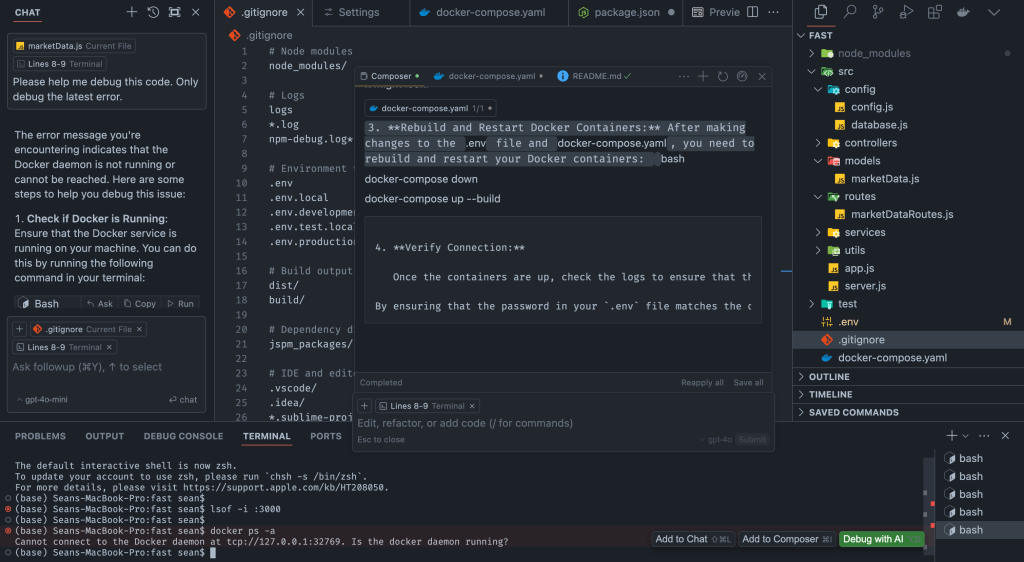 Continue reading →: 24 Hours with Cursor IDE: A Glimpse into the Future of Software Development
The way developers approach problem-solving is evolving rapidly. Over the last 24 hours of using Cursor IDE, built as a fork of VS Code, I’ve seen how AI integration is not just a novelty but a necessity that’s reshaping the workflows of the modern software engineer. Cursor goes beyond being…
Hello,
I’m Sean

Welcome to the Scalable Human blog. Just a software engineer writing about algo trading, AI, and books. I learn in public, use AI tools extensively, and share what works. Educational purposes only – not financial advice.
Let’s connect
Join the mailing list
Stay updated with latest posts.






 Scalable Human Blog