
-
 Continue reading →: Deployment Patterns in Microservices: Building a Robust and Scalable Future
Hey there, friends! Today, we’ll dive into the world of microservices and explore different deployment patterns that can help us build robust and scalable applications. As our apps grow more complex, it’s essential to have a solid strategy for deploying, managing, and scaling microservices. We’ll discuss some popular deployment patterns,…
-
 Continue reading →: Rollback Strategies: Safeguarding Our Apps in the Face of Change
Hello, friends! Today, let’s discuss a crucial aspect of software development that often gets overlooked: rollback strategies. When we update our apps, things don’t always go as planned. That’s why having a solid rollback plan is so important. We’ll explore why rollback strategies matter, different approaches to rolling back, and…
-
 Continue reading →: Feature Flags: Unleashing the Power of Controlled Change
Hey there, friends! Today we’re going to explore a fantastic technique that’s making waves in the world of software development: Feature Flags. These handy little tools give us the power to turn features on and off in our apps without having to redeploy code. Let’s dive into why feature flags…
-
 Continue reading →: Canary Deployments: Testing the Waters for a Safer Future
Hey there, friends! Today, let’s talk about a fascinating deployment strategy called canary deployments. They’re all about rolling out updates carefully and safely, so we can avoid big problems and keep our users happy. We’ll dive into why canary deployments matter, how they work, and some tools that help make…
-
 Continue reading →: Continuous Integration and Continuous Deployment (CI/CD): Building a Better Future, One Commit at a Time
Hello, friends! Today we’ll dive into an exciting topic that’s reshaping the way we build and deliver software: Continuous Integration and Continuous Deployment (CI/CD). We’ll explore why CI/CD matters, how it works, and some popular tools that help developers embrace this amazing approach. Get ready for a world of seamless…
-
 Continue reading →: Blue-Green Deployments: Smoother Updates for a Better Future
Hey there, friends! Today, we’ll talk about something really cool called blue-green deployments. If you’re into software, you’ve seen how updates can sometimes mess things up. But with blue-green deployments, we can make updates smoother and safer. Let’s find out why this is important and see an example using Kubernetes.…
-
 Continue reading →: Chaos Engineering in Kubernetes?!
What is Chaos Engineering and where did it come from? Chaos Engineering is a proactive approach to improving the resilience and reliability of software systems. In software development, it involves intentionally introducing failures, errors, or unexpected events into a system to test its ability to withstand and recover from these…
-
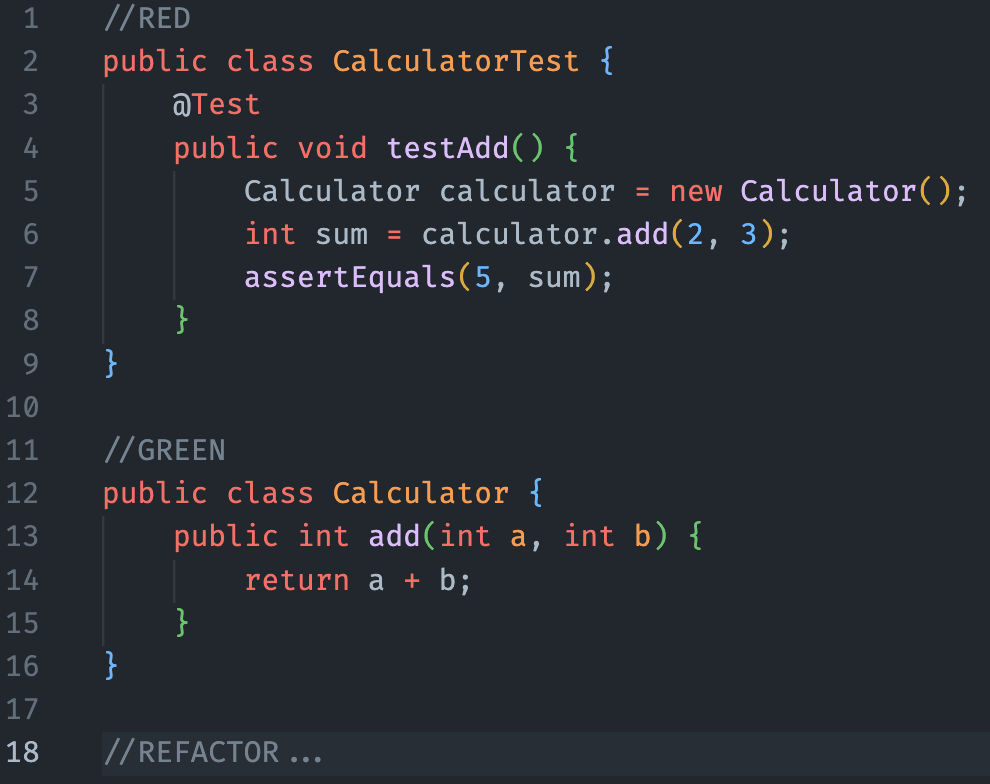 Continue reading →: What is Red-Green-Refactor?
Red-Green-Refactor is a software development technique used in Test-Driven Development (TDD), a methodology focused on writing tests before writing the actual code. The process is divided into three distinct phases: The Red-Green-Refactor cycle is repeated for each new functionality or feature, which helps to ensure that the code is well-tested…
-
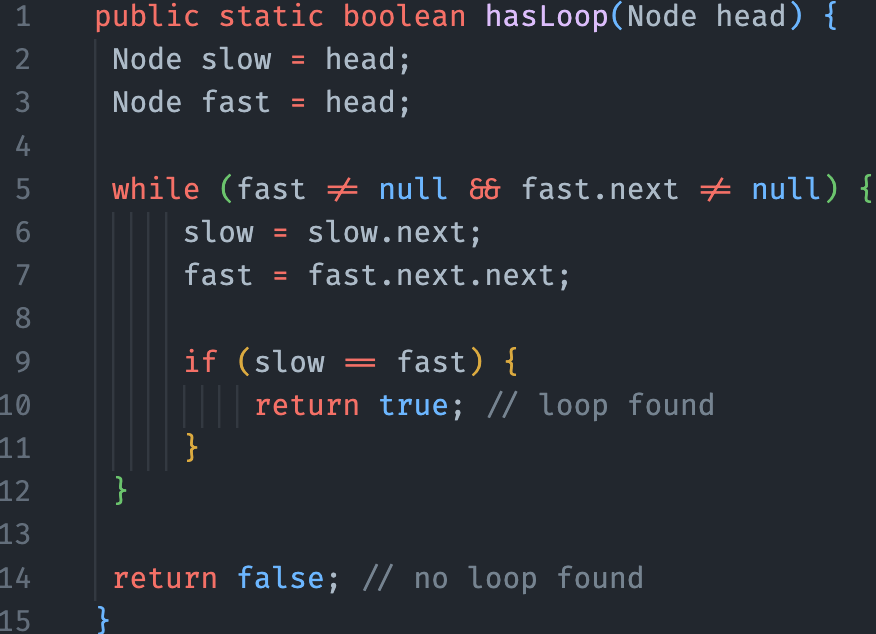 Continue reading →: How to Check if a Linked List Contains Loop in Java?
The problem of detecting loops in a linked list is an important algorithmic problem in computer science. A linked list is a popular data structure used to store a collection of elements, where each element points to the next one in the list. A loop occurs in a linked list…
-
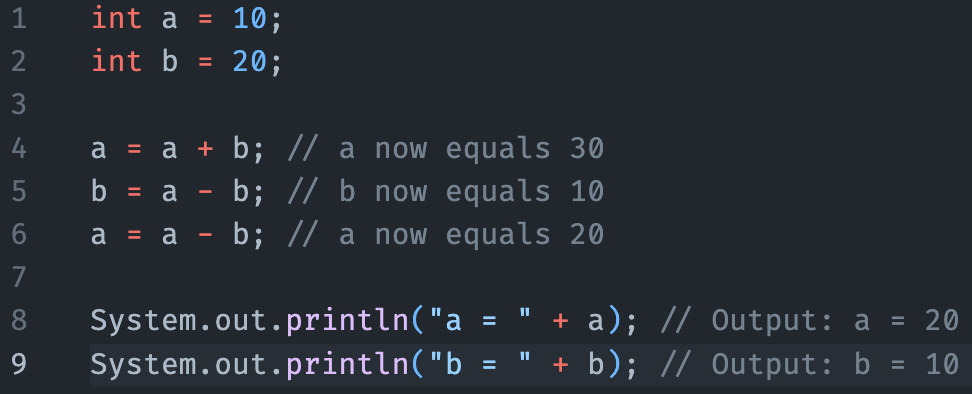 Continue reading →: How to Swap Two Number Numbers without using Temp variable in Java?
Swapping two numbers without using a temporary variable is a fundamental problem in computer programming that tests one’s ability to think logically and creatively. It requires a deep understanding of basic programming concepts and the ability to solve problems through analytical thinking. This skill is especially important in programming contexts…
-
 Continue reading →: Write a Java Program to Check if a Number is Prime or Not?
What is a Prime Number? Lets define the problem statement before we start to write the code! A prime number is a positive integer that is greater than 1, and has no other divisors other than 1 and itself. In simpler terms, a prime number is a number that is…
-
 Continue reading →: How to Write a Java Program to Print a Fibonacci Series
What is the Fibonacci Series? The Fibonacci sequence is a series of numbers in which each number is the sum of the two preceding ones, starting from 0 and 1. The sequence goes 0, 1, 1, 2, 3, 5, 8, 13, 21, 34, and so on. The Fibonacci sequence is…
-
 Continue reading →: Difference between TreeSet and TreeMap in Java?
TreeSet and TreeMap are both classes in Java that implement the Set and Map interfaces, respectively. They are both sorted collections, which means the elements in the collections are stored in a sorted order. The main difference between the two is that a TreeSet is a set of unique elements,…
-
 Continue reading →: Difference between wait() and notify() in Java
To begin, the wait() and notify() methods belong to the Object class in Java. This is to replaces the need to poll conditions repeatedly until they meet consensus – the problem with this is that it eats a lot of CPU resources. So what do they do? Let’s answer that…
-
 Continue reading →: Difference between HashMap and HashTable in Java?
Let’s begin with the similarities of HashMap and HashTable: HashMap vs HashTable HashMap HashTable HashMap Example import java.util.HashMap; public class HashMapExample { public static void main(String[] args) { HashMap<String, Integer> map = new HashMap<>(); map.put(“apple”, 5); map.put(“banana”, 3); map.put(“orange”, 10); int value = map.get(“banana”); System.out.println(value); // Output: 3 map.remove(“orange”); map.put(“orange”,…
-
 Continue reading →: Difference between ArrayList and LinkedList in Java?
An ArrayList and a LinkedList are both data structures used to store a collection of elements, but they have some key differences in terms of their implementation and performance. ArrayList LinkedList Implemented as a dynamic array Implemented as a doubly-linked list Fast random access to elements by index Fast insertion…
-
 Continue reading →: Difference between Runnable and Callable Interface in Java?
Runnable Callable Defines a task that can be executed by a thread Similar to Runnable, but it is intended to yield a value. Contains one method run() which holds the logic that will be executed by the thread Contains one method call() which holds the logic that will be executed…
-
 Continue reading →: Difference between extends Thread vs Runnable in Java?
In Java there are two means to generate new “thread of execution”. We will divide and label these two approach Thread and Runnable. Thread Example? Runnable Example? Comparison between Thread and Runnable? Thread Runnable Each thread creates a unique object and get associated with it 🤔 Multiple threads share the…
-
 Continue reading →: Difference between String, StringBuffer and StringBuilder in Java?
String is one of the most used classes in Java! Both StringBuffer and StringBuilder classes provided methods to manipulate Strings. To understand the difference we will explore and compare these classes in Java and when it is best to use them. String vs StringBuffer vs StringBuilder mutability? String vs StringBuffer…
-
 Continue reading →: Databases – Single-Object Writes
Atomicity in isolation also applies when a single object is being changed. For example consider the problem you stumble upon when writing a 20kb JSON document to a database: These updates would be quite confusing 🤷♂️ Storage engines and single object operations So storage engines almost universally aim to provide…
Hello,
I’m Sean

Welcome to the Scalable Human blog. Just a software engineer writing about algo trading, AI, and books. I learn in public, use AI tools extensively, and share what works. Educational purposes only – not financial advice.
Let’s connect
Join the mailing list
Stay updated with latest posts.






 Scalable Human Blog