-
 Continue reading →: Maven, Gradle, Ant: An Evaluation of Java’s Top Build Tools
The selection of a build tool could drastically affect your project’s overall development process. Maven, Gradle, and Ant have risen to the top of the Java ecosystem, each with its unique strengths and drawbacks. Today, we’ll take a detailed look at each tool, comparing their capabilities and revealing which might…
-
Continue reading →: Maven, The Heartbeat of Java Projects
Maven, a cornerstone in the world of Java development, brings a lot to the table when it comes to automating our software builds. Let’s enhance our understanding by exploring effective practices, along with hands-on examples to better comprehend these principles. 1. Keep Your POM Clean and Lean The Project Object…
-
Continue reading →: Unleashing Project Modularity: Creating Maven Multi-module Projects
As your project grows in size and complexity, maintaining a well-organised codebase becomes crucial. Maven comes to the rescue with its support for multi-module projects. In this blog post, we’ll explore the power of Maven’s multi-module projects and learn how to create them. Buckle up as we embark on a…
-
Continue reading →: Empowering Your Maven Builds: Unleashing Customisation with Plugins and Profiles
Introduction: Maven, the popular build automation tool, offers a world of customisation possibilities to suit your project’s unique needs. By leveraging plugins and profiles, you can shape the build process according to your requirements. In this blog post, we’ll explore how to customise Maven builds using plugins and profiles, unlocking…
-
Continue reading →: Mastering Dependency Management with Maven
As developers, we rely on various libraries and frameworks to build powerful applications. However, managing dependencies can quickly become a daunting task. Fear not, for Maven is here to save the day! In this blog post, we’ll dive into the world of effective dependency management with Maven, uncovering best practices,…
-
 Continue reading →: Unleashing the Power of the Maven Lifecycle and Build Phases!
Get ready to dive into the incredible world of Maven! It’s time to unveil the magic behind Maven’s lifecycle and its mind-blowing build phases. Brace yourself for an exhilarating journey of project management and customization. In this electrifying blog post, we’ll unravel the secrets of the Maven lifecycle, explore the…
-
 Continue reading →: Cracking the Code: Solving the Producer-Consumer Problem in Java
Hello, fellow coders! Today, let’s delve into a classic problem in concurrent programming – the Producer-Consumer Problem. We’ll solve this problem in Java, using its robust concurrency control mechanisms. Let’s get started! Understanding the Problem The Producer-Consumer problem is a classic example of a multi-process synchronization problem. Here, we have…
-
 Continue reading →: Preparing for the Future of AI as a Developer: A Roadmap
Hello, friends! It’s undeniable: Artificial Intelligence (AI) is not only changing our present but is also rapidly shaping our future. As developers, it’s important that we prepare and adapt to these changes. Today, let’s explore ways to get ourselves ready for the impending AI revolution. Recognising the AI Wave AI…
-
 Continue reading →: Top Kubernetes Commands for Debugging: A Lifesaver for Developers
Hello, folks! Today, we’ll explore one of the most exciting parts of a software engineer’s life: debugging, specifically in the vast sea of Kubernetes. While it might seem daunting, Kubernetes provides us with some handy tools and commands to aid in our quest. Let’s dive in! Kubernetes and Debugging Kubernetes…
-
 Continue reading →: Unlocking Kubernetes Secrets: Their Usage and Importance
Hello, fellow Kubernetes enthusiasts! Today we’re decrypting an essential Kubernetes feature: Secrets. What are they, why are they crucial, and how can they be used? Let’s delve into the enigmatic world of Kubernetes Secrets. Understanding Kubernetes Secrets In Kubernetes, a Secret is an object that contains a small amount of…
-
 Continue reading →: Java Project Configurations: Application.properties, JVM Args, and POM Variables
Hello, fellow developers! Today we’re diving into the world of Java project configurations. In particular, we’re focusing on three essential components: application.properties, JVM arguments, and POM variables. Let’s explore why these different configuration points exist and what role each plays in a Java project. Decoding Project Configurations Configuration settings are…
-
 Continue reading →: Threads in Java: The Difference Between Calling Start and Run Methods
Hello, Java enthusiasts! Today, we’re threading our way through a commonly asked question in Java: What is the difference between calling the start() and run() methods of a Thread? Let’s unravel this mystery together. Understanding Threads in Java Threads are the smallest unit of a process that can be executed…
-
 Continue reading →: Factorials Unleashed: Calculating Factorial in Java
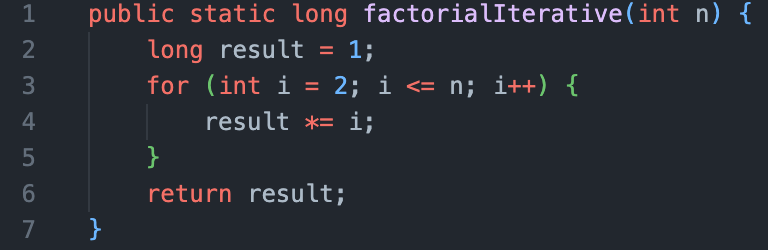
Hello, Java enthusiasts! Today we are diving into the world of recursion and iteration to unravel a classic mathematical operation – the factorial. Let’s explore how we can write a Java program to calculate the factorial of a number. Factorial and Its Significance In mathematics, the factorial of a non-negative…
-
 Continue reading →: Turn It Around: Reversing a Number in Java
Hey, Java explorers! Today, we’re going to learn an interesting and common problem-solving exercise: reversing a number in Java. It might seem like a simple task, but it can be quite intriguing, especially for newcomers to the language. So, let’s get cracking and see how we can reverse a number…
-
 Continue reading →: Standing Up for Your Health: The Benefits of a Standing Desk for Developers
Hello fellow technophiles! Today we are taking a step away from our usual programming topics and diving into an area that profoundly impacts us all – our health and well-being. As developers, we often spend long hours sitting in front of our computers, a lifestyle that, while engaging our minds,…
-
 Continue reading →: Reversing an Array In-Place: A Java Guide
Hello, fellow Java enthusiasts! Today, we’ll learn how to reverse an array in-place using Java. Reversing an array is a common programming task that can be accomplished using different techniques. However, the in-place approach is particularly interesting, as it requires no additional data structure and is memory-efficient. So, let’s dive…
-
Continue reading →: Finding the Minimum and Maximum Number in an Array: Java Edition
Greetings, Java aficionados! In this blog post, we’ll explore an essential task in Java programming: finding the minimum and maximum numbers in an array. Although Java provides handy utility methods in the Arrays and Collections classes, we’ll demonstrate a more manual approach to help you better understand the process. So,…
-
 Continue reading →: Top 5 Java Coding Practices I’ve Learned
Hello, fellow Java enthusiasts! Over the years, I have gathered valuable insights and best practices while working with Java. I am excited to share my top 5 Java coding practices that have helped me write cleaner, more efficient, and maintainable code. Let’s jump right in! 1. Follow Java Naming Conventions…
-
 Continue reading →: Access Modifiers in Java: Exploring Private, Public, Package, and Protected
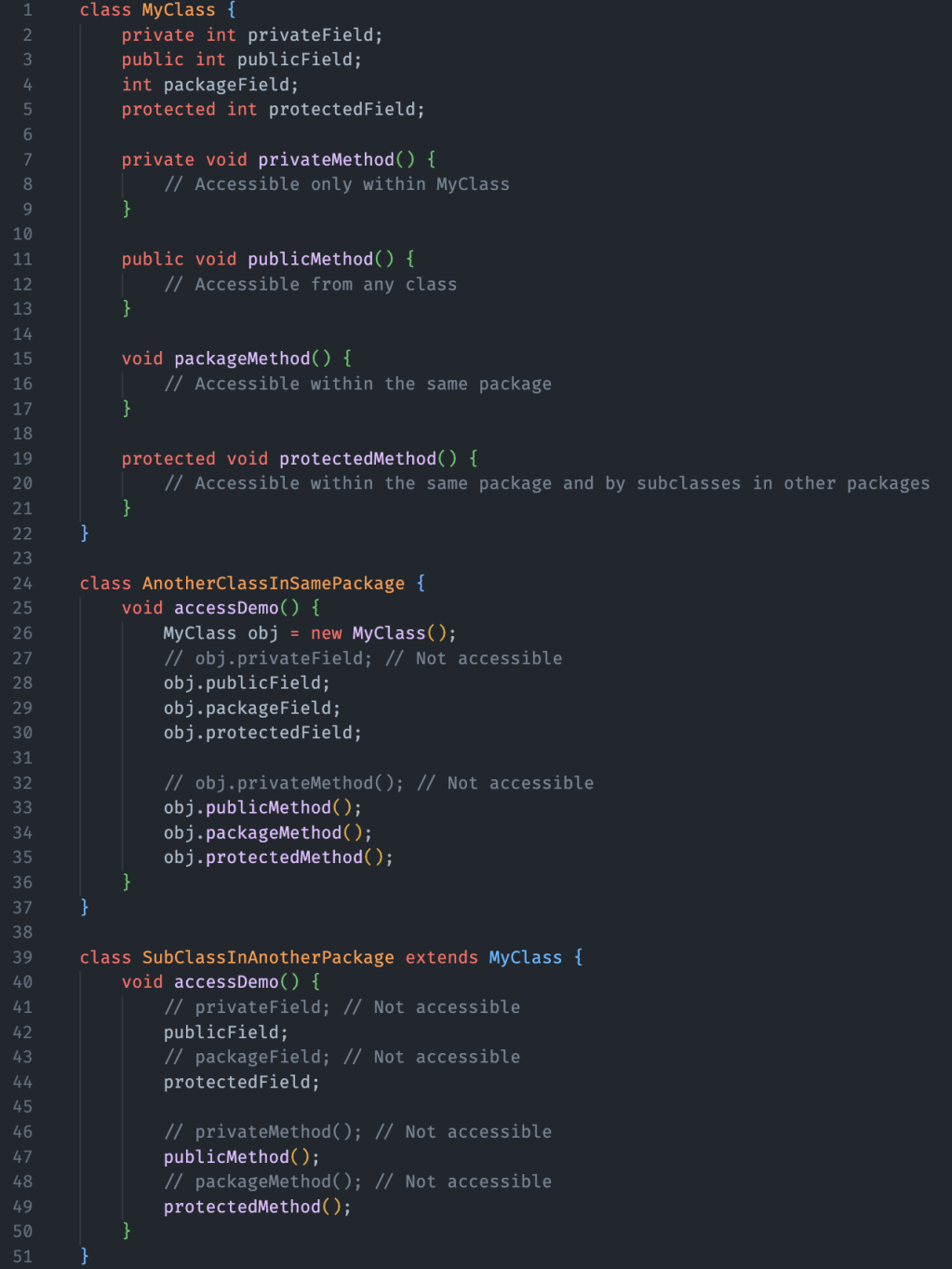
Hello, fellow code enthusiasts! Today, we are going to dive into the world of access modifiers in Java. Access modifiers control the visibility and accessibility of class members, such as fields, methods, and inner classes. In Java, there are four access modifiers: private, public, package (default), and protected. In this…
-
 Continue reading →: Can You Override a Static Method in Java? Demystifying Method Overriding and Static Methods
Greetings, dear readers! Today, we’re going to delve into the world of Java methods, focusing specifically on the topic of overriding static methods. In object-oriented programming, method overriding is a key feature of inheritance that allows a subclass to provide a new implementation for a method that is already defined…
Hello,
I’m Sean

Welcome to the Scalable Human blog. I’m a software engineer who likes building things, from software and AI tools to robots, Raspberry Pi projects, smart-home systems and energy monitoring. I learn in public, experiment with technology and share what I discover along the way.
Let’s connect
Join the mailing list
Stay updated with latest posts.