-
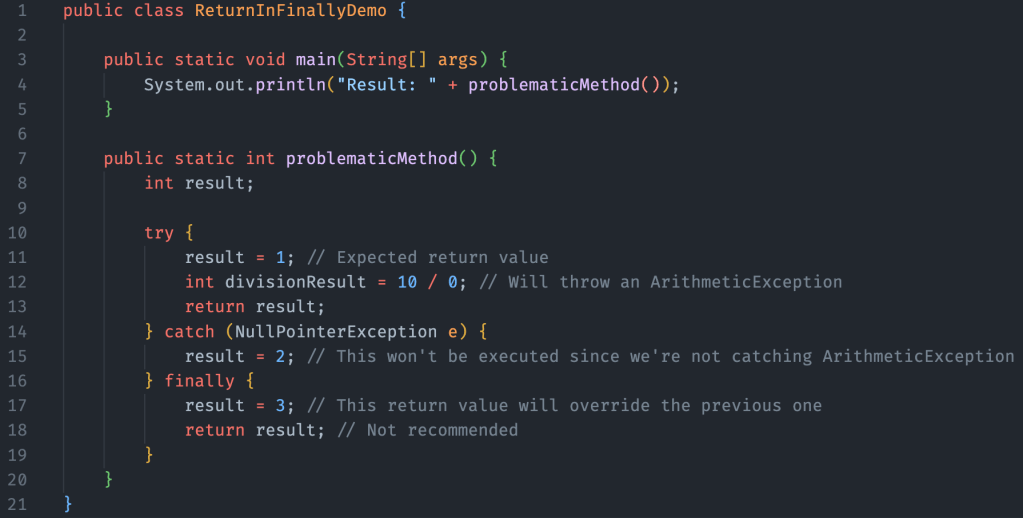 Continue reading →: Return Statements in a Finally Clause: Understanding the Consequences
Hello, dear readers! Today, we will dive into the intriguing world of Java exception handling, focusing on the use of return statements in a finally clause. While the finally block is widely used to execute code regardless of whether an exception occurs or not, the consequences of including a return…
-
 Continue reading →: Harnessing the Power of AI: Unleashing My Full Potential with ChatGPT and GitHub Copilot
Greetings, fellow tech enthusiasts! As a passionate software developer, I’m always on the lookout for tools and techniques to elevate my coding game. Enter ChatGPT and GitHub Copilot—two AI-powered tools that have revolutionised the way I approach programming. In this post, I’ll share my journey of integrating these powerful tools…
-
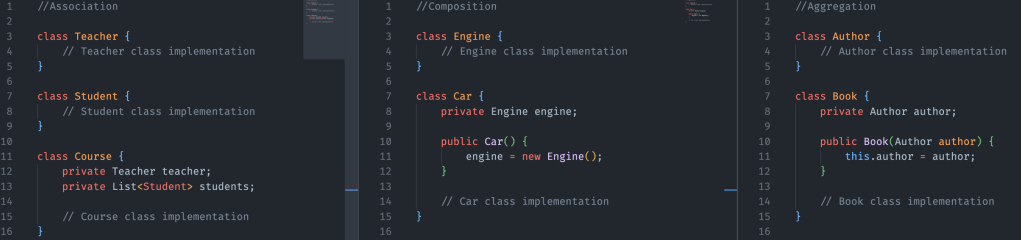 Continue reading →: Association, Composition, and Aggregation: Disentangling the Relationships in Object-Oriented Programming
Hello, code connoisseurs! As we venture deeper into the realm of object-oriented programming (OOP), understanding the relationships between objects becomes increasingly important. In this post, we’ll explore three core relationships: association, composition, and aggregation. By distinguishing between these concepts, we’ll gain a solid foundation for designing more robust and maintainable…
-
 Continue reading →: Transient vs. Volatile in Java: A Deep Dive into Variable Modifiers
Greetings, code enthusiasts! In today’s journey through the Java universe, we’ll delve into the distinction between the transient and volatile keywords. These variable modifiers serve specific purposes and play a crucial role in achieving desired behavior in concurrent and object serialization scenarios. We’ll explore the differences between these keywords, examine…
-
 Continue reading →: FileInputStream vs. FileReader in Java: Understanding Their Key Differences
Embark on a journey through the fascinating world of file handling in Java, as we unravel the key differences between FileInputStream and FileReader. Discover how these two classes cater to distinct aspects of file handling, with FileInputStream adept at reading binary files and FileReader excelling at handling text files. Join…
-
 Continue reading →: Converting Bytes to Characters in Java: A Guide to Decoding Byte Arrays
Greetings, fellow code enthusiasts! Today, we’ll explore the process of converting bytes to characters in Java, a common task when dealing with data from external sources or working with network communication protocols. The process of converting bytes to characters is also known as decoding. In this blog post, we’ll discuss…
-
 Continue reading →: Querydsl: Boosting Your JPA Experience with Type-Safe, Dynamic Queries
Greetings, dear readers! Today, we’re going to delve into the world of Querydsl, a powerful library that enhances your JPA experience by providing a type-safe and dynamic way to build queries. While JPA is a fantastic tool for managing relational data in Java applications, creating complex, dynamic queries can be…
-
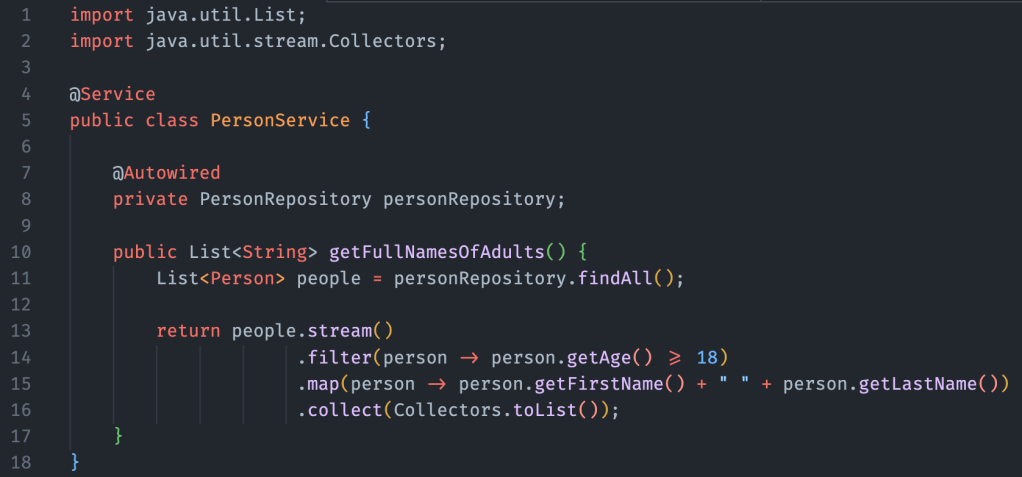 Continue reading →: Java Streams with JPA: Efficient Data Processing in the World of Persistence
Greetings, dear devs again! Today, we’ll explore the fascinating world of Java Streams in combination with Java Persistence API (JPA) to create powerful, efficient, and expressive data processing solutions. Java Streams enable us to harness the power of functional programming, while JPA provides a standardised way to interact with relational…
-
 Continue reading →: Java Streams: Unleashing the Power of Functional Programming and Data Processing
Greetings, fellow enthusiasts! Today, we’ll dive into the realm of Java Streams, which enable us to harness the power of functional programming for efficient and expressive data processing. Introduced in Java 8 alongside lambda expressions, streams provide a declarative way to manipulate collections of data with a concise, readable syntax.…
-
 Continue reading →: Java Lambda Expressions: Embrace the Power of Functional Programming
Hello, dear devs! Today, we’ll dive into the world of functional programming in Java and learn how to use lambda expressions. Lambda expressions, introduced in Java 8, are a powerful way to represent instances of single-method interfaces concisely. They enable us to write more expressive and efficient code while reducing…
-
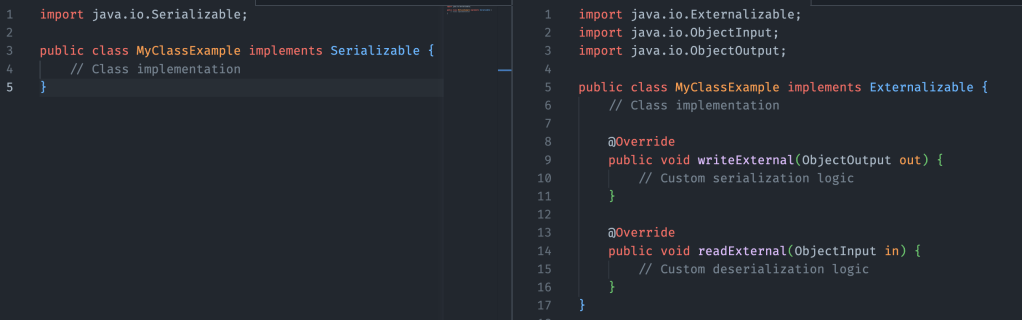 Continue reading →: Serializable vs. Externalizable in Java: Mastering Object Serialization
Greetings, devs! In today’s post, we’ll delve into the world of Java object serialization and explore the differences between two key interfaces: Serializable and Externalizable. Understanding these interfaces and their distinct use cases is crucial for effective object serialization in Java. So let’s embark on this enlightening journey and unlock…
-
 Continue reading →: Crafting a Java Program to Reverse Strings: Unleashing Your Inner Coding Wizard?
Hey there again, friends! In today’s post, we’ll dive into the world of Java programming and create a simple program to reverse a string without using any built-in Java API. This exercise is a fantastic way to strengthen your Java skills and get a better understanding of how strings work…
-
 Continue reading →: Deployment Patterns in Microservices: Building a Robust and Scalable Future
Hey there, friends! Today, we’ll dive into the world of microservices and explore different deployment patterns that can help us build robust and scalable applications. As our apps grow more complex, it’s essential to have a solid strategy for deploying, managing, and scaling microservices. We’ll discuss some popular deployment patterns,…
-
 Continue reading →: Rollback Strategies: Safeguarding Our Apps in the Face of Change
Hello, friends! Today, let’s discuss a crucial aspect of software development that often gets overlooked: rollback strategies. When we update our apps, things don’t always go as planned. That’s why having a solid rollback plan is so important. We’ll explore why rollback strategies matter, different approaches to rolling back, and…
-
 Continue reading →: Feature Flags: Unleashing the Power of Controlled Change
Hey there, friends! Today we’re going to explore a fantastic technique that’s making waves in the world of software development: Feature Flags. These handy little tools give us the power to turn features on and off in our apps without having to redeploy code. Let’s dive into why feature flags…
-
 Continue reading →: Canary Deployments: Testing the Waters for a Safer Future
Hey there, friends! Today, let’s talk about a fascinating deployment strategy called canary deployments. They’re all about rolling out updates carefully and safely, so we can avoid big problems and keep our users happy. We’ll dive into why canary deployments matter, how they work, and some tools that help make…
-
 Continue reading →: Continuous Integration and Continuous Deployment (CI/CD): Building a Better Future, One Commit at a Time
Hello, friends! Today we’ll dive into an exciting topic that’s reshaping the way we build and deliver software: Continuous Integration and Continuous Deployment (CI/CD). We’ll explore why CI/CD matters, how it works, and some popular tools that help developers embrace this amazing approach. Get ready for a world of seamless…
-
 Continue reading →: Blue-Green Deployments: Smoother Updates for a Better Future
Hey there, friends! Today, we’ll talk about something really cool called blue-green deployments. If you’re into software, you’ve seen how updates can sometimes mess things up. But with blue-green deployments, we can make updates smoother and safer. Let’s find out why this is important and see an example using Kubernetes.…
-
 Continue reading →: Chaos Engineering in Kubernetes?!
What is Chaos Engineering and where did it come from? Chaos Engineering is a proactive approach to improving the resilience and reliability of software systems. In software development, it involves intentionally introducing failures, errors, or unexpected events into a system to test its ability to withstand and recover from these…
-
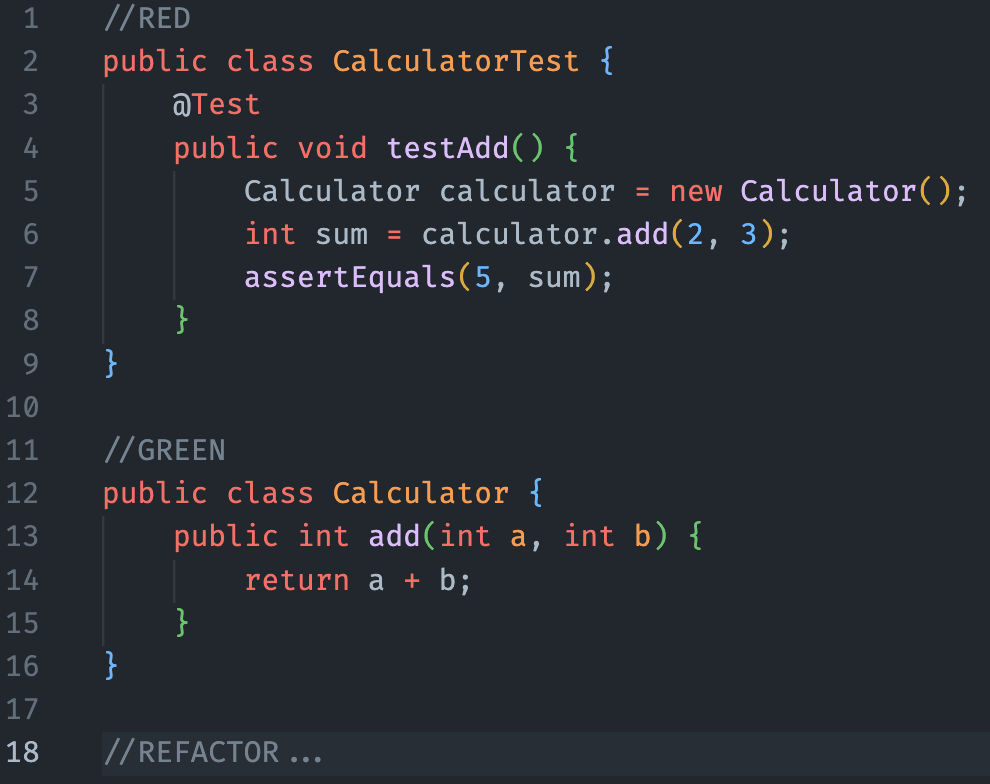 Continue reading →: What is Red-Green-Refactor?
Red-Green-Refactor is a software development technique used in Test-Driven Development (TDD), a methodology focused on writing tests before writing the actual code. The process is divided into three distinct phases: The Red-Green-Refactor cycle is repeated for each new functionality or feature, which helps to ensure that the code is well-tested…
Hello,
I’m Sean

Welcome to the Scalable Human blog. I’m a software engineer who likes building things, from software and AI tools to robots, Raspberry Pi projects, smart-home systems and energy monitoring. I learn in public, experiment with technology and share what I discover along the way.
Let’s connect
Join the mailing list
Stay updated with latest posts.